GPUs drink power. A single card under load pulls hundreds of watts, a rack server with dual power supplies wants two clean feeds, & a basement full of both trips a shared 15 amp circuit before lunch.
So I built a powerwall. Two independent 20 amp circuits, 12 gauge copper, spec grade receptacles, all landing behind a steel shelf that holds a permacomputer.
The left side runs on circuit "white." The right side runs on circuit "black." Each side gets its own yellow cable fished all the way back to its own breaker in the panel. Nothing shared. A server with redundant power supplies keeps running when either supply loses power. Plug one supply into white & the other into black. Trip a breaker, & the surviving supply carries the whole load on the other circuit while the server keeps serving. That separation makes the redundancy, so keep each server's full draw within what one circuit can carry alone.
The math stays simple. A 20 amp breaker at 120 volts carries 16 amps continuous under the 80% rule, roughly 1,900 watts per circuit, close to 3,800 watts across both. Enough headroom for a few GPUs & a server to run all night without anything getting warm.
One Saturday, one wall. Here it goes in pictures. Fair warning: none of this carries current yet. Both leads still wait at the breaker panel, & nothing gets tested until they land. More on that at the end.
Parts
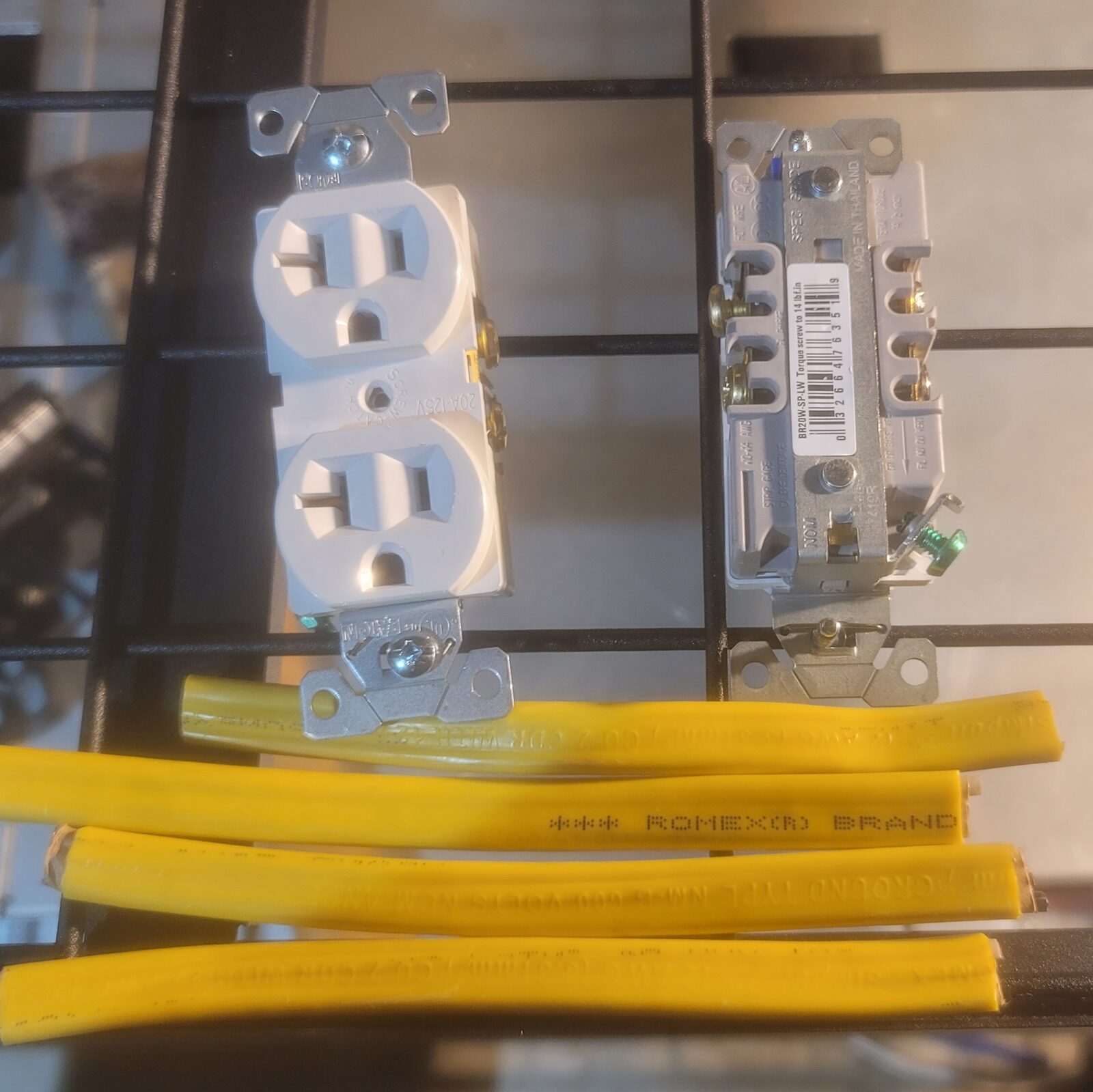
20 amp duplex receptacles & yellow 12/2 Romex. Yellow sheathing means 12 gauge, a 20 amp wire. The sideways T on the neutral slot marks a true 20 amp receptacle.
Boxes on studs
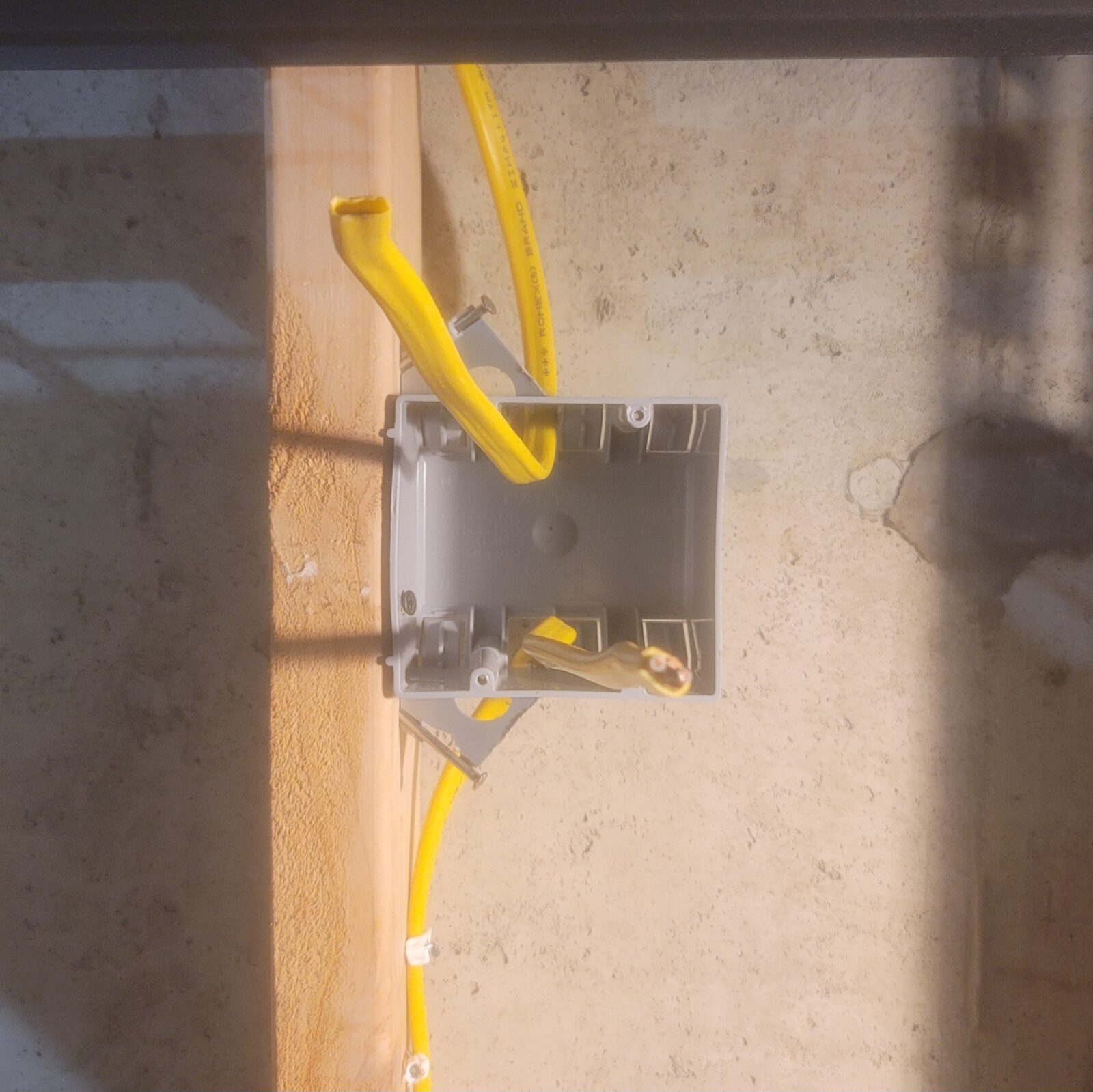
Top box. A two gang box nailed to a stud on the foundation wall, feed in from above, sheath stripped. A second run continues down the stud to the bottom box.
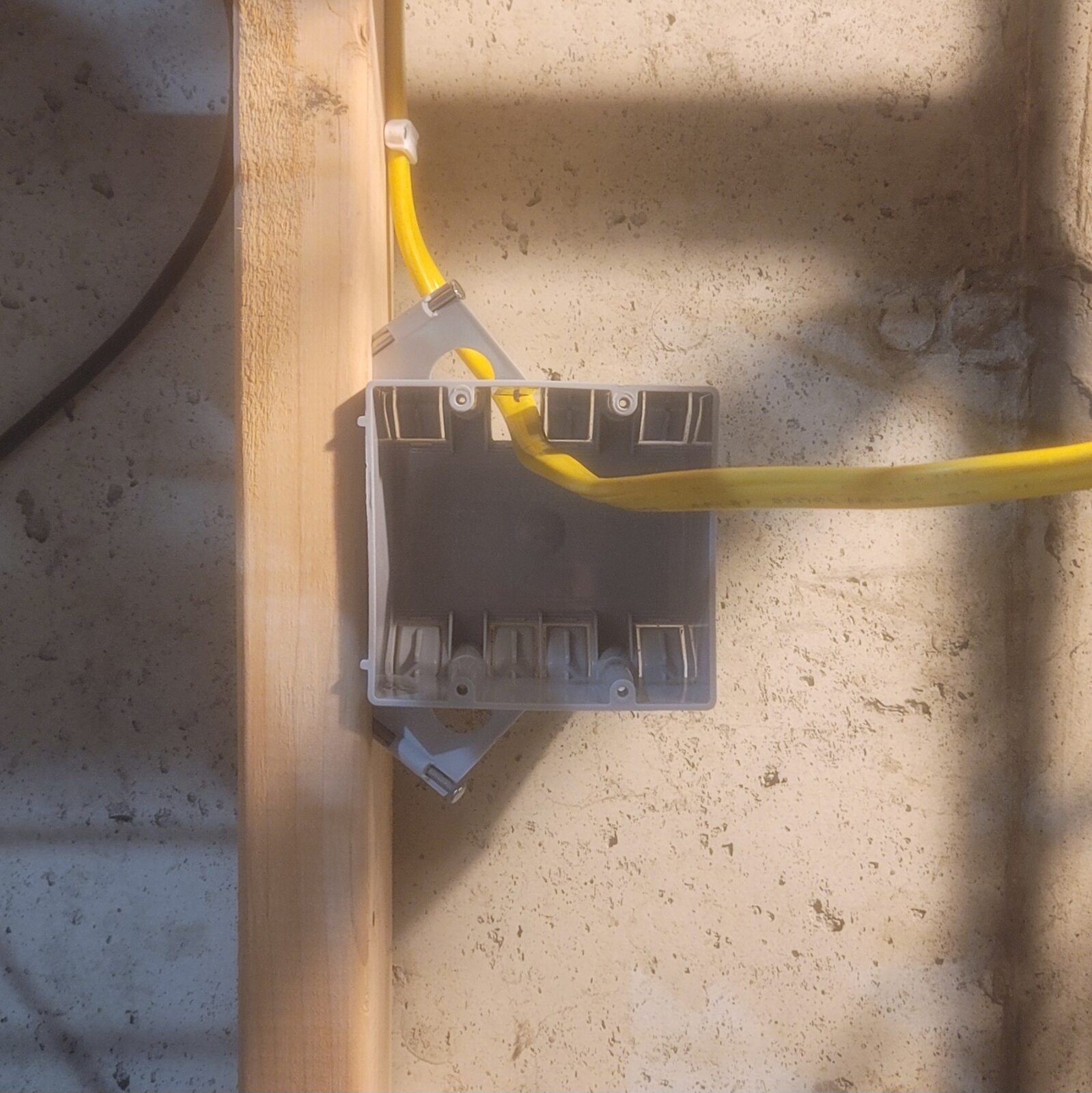
Bottom box. Cable stapled down the stud from the top box, ready to come in. Each side stacks two boxes like this, one per shelf level.
Bench work
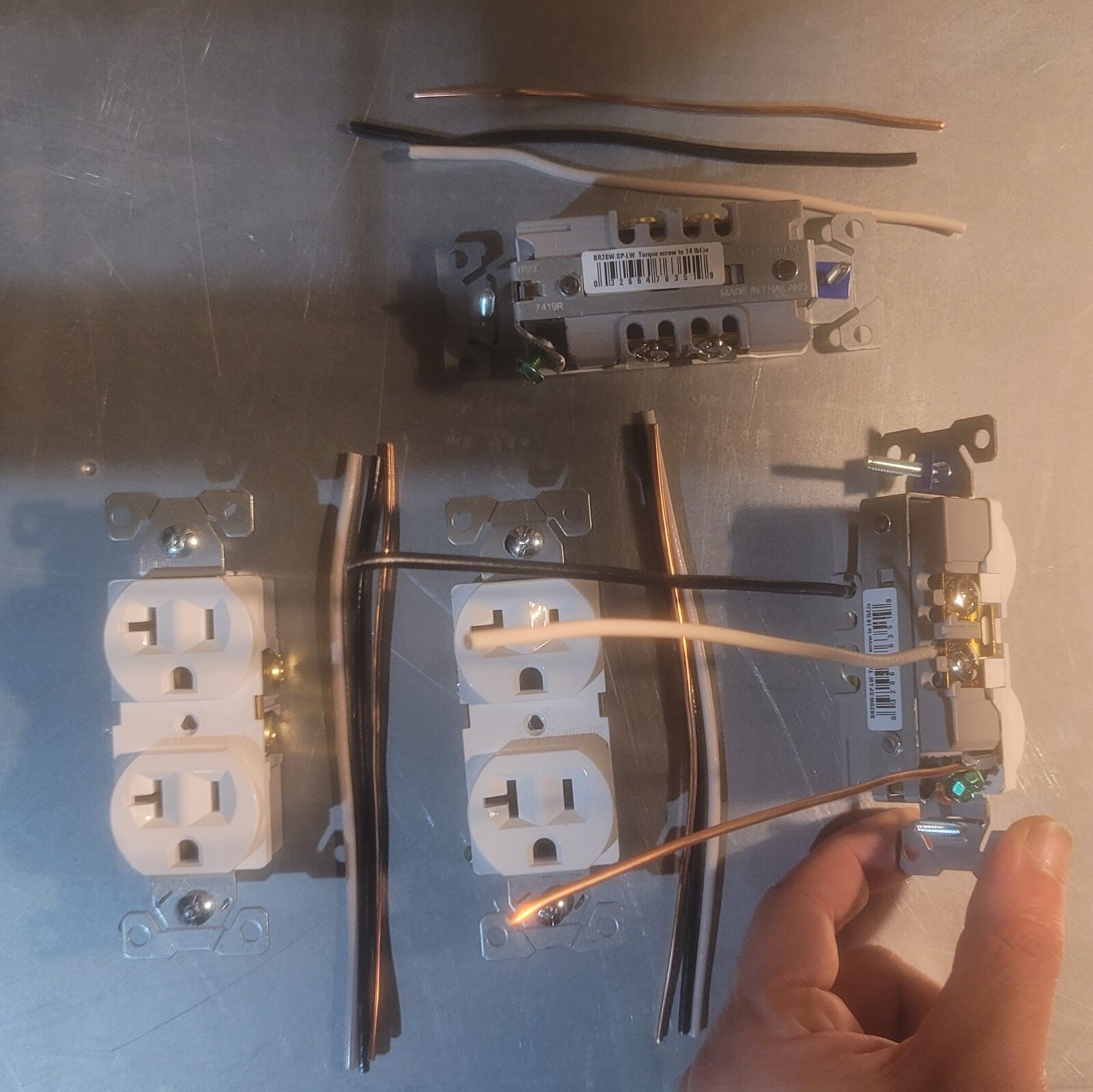
Wiring receptacles on a bench beats wiring them upside down in a box. Black, white & bare copper pigtails, cut to length.
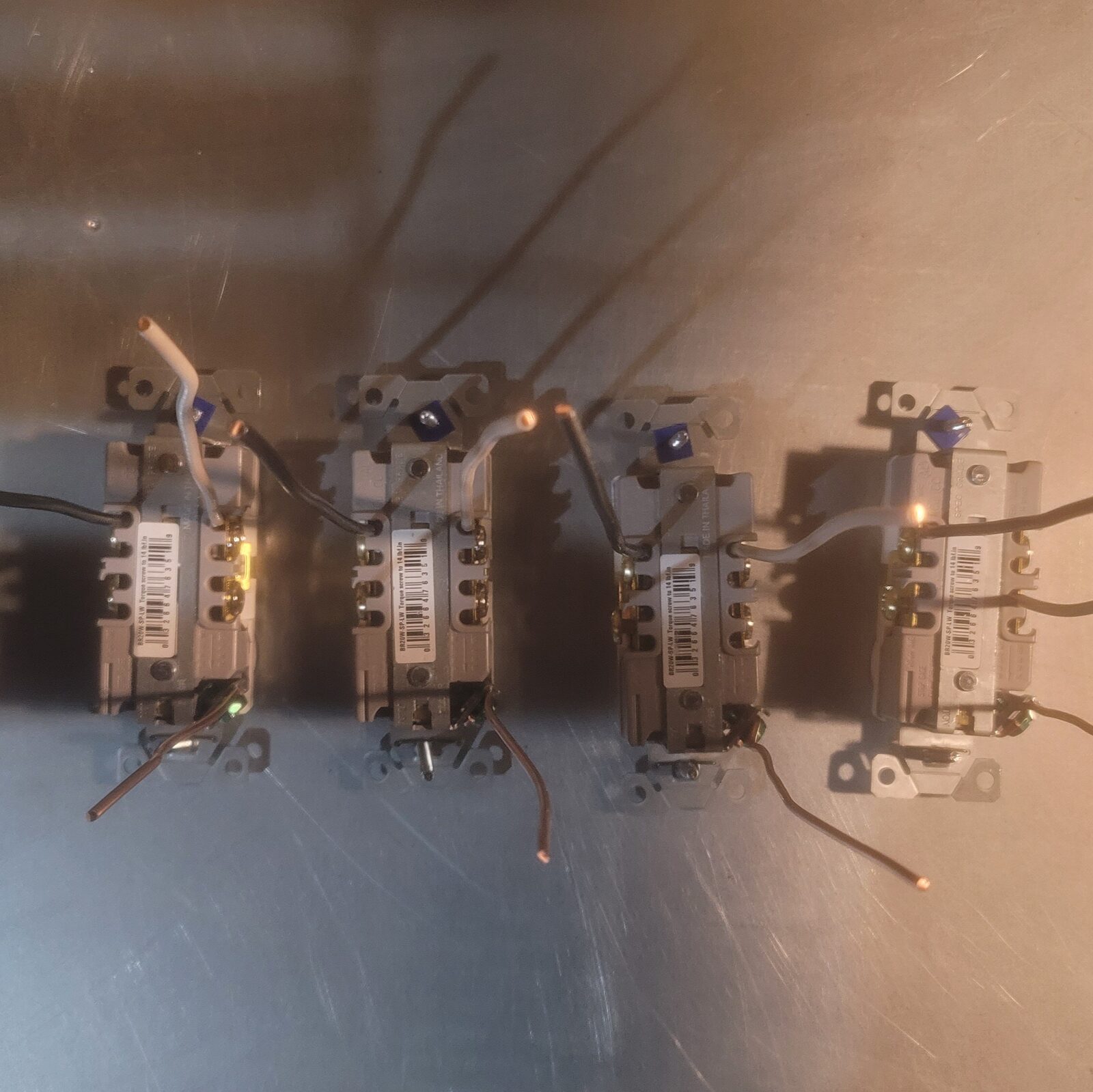
Four receptacles back wired. These clamp style terminals squeeze a straight wire under a plate, torqued to 14 inch pounds per the label. No wrapping wire around screws, no backstab push-in holes.
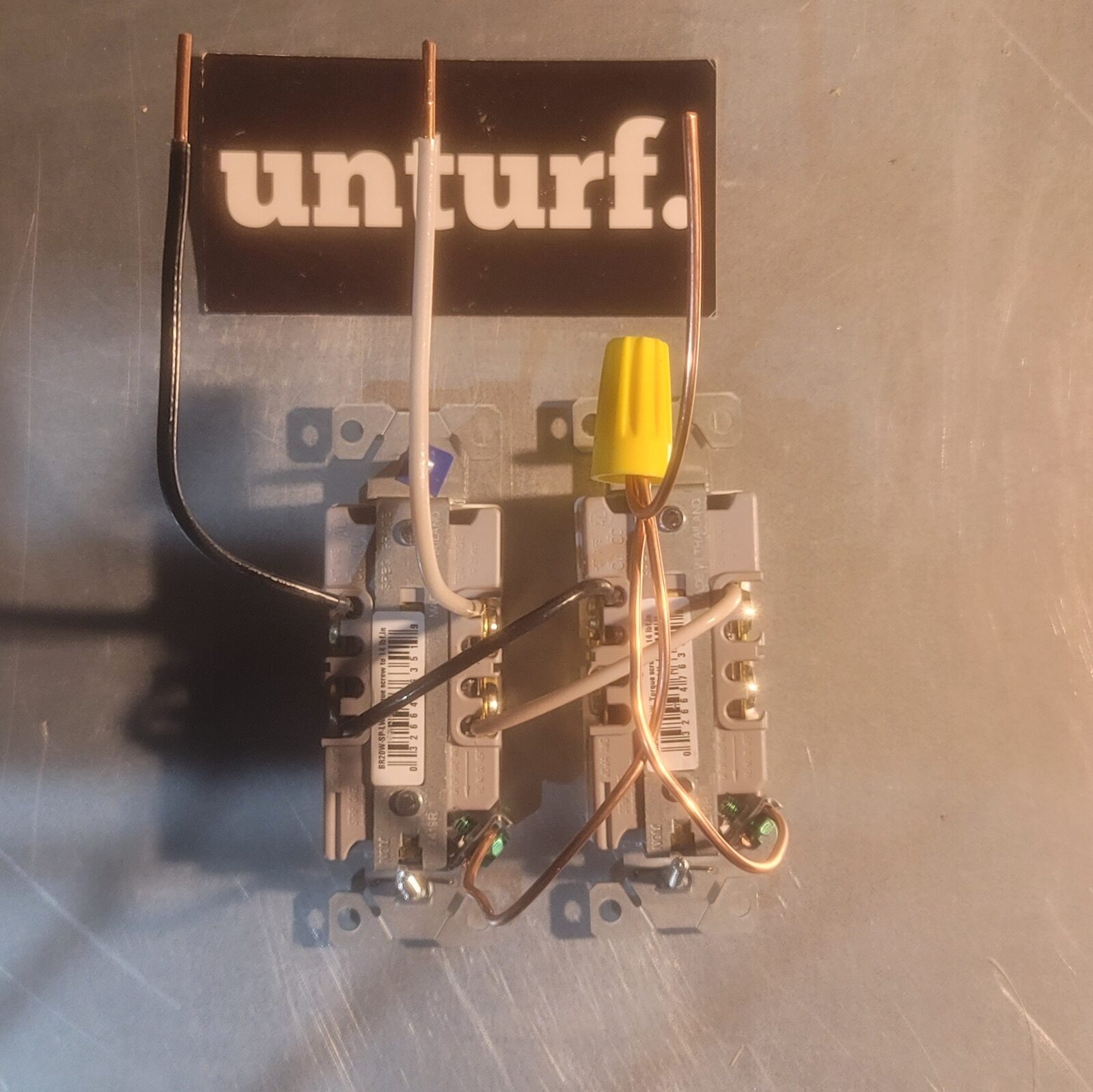
A pair jumpered together, hot to hot, neutral to neutral, grounds bundled under one wire nut. One set of leads goes to the box. unturf approved.
Splicing in
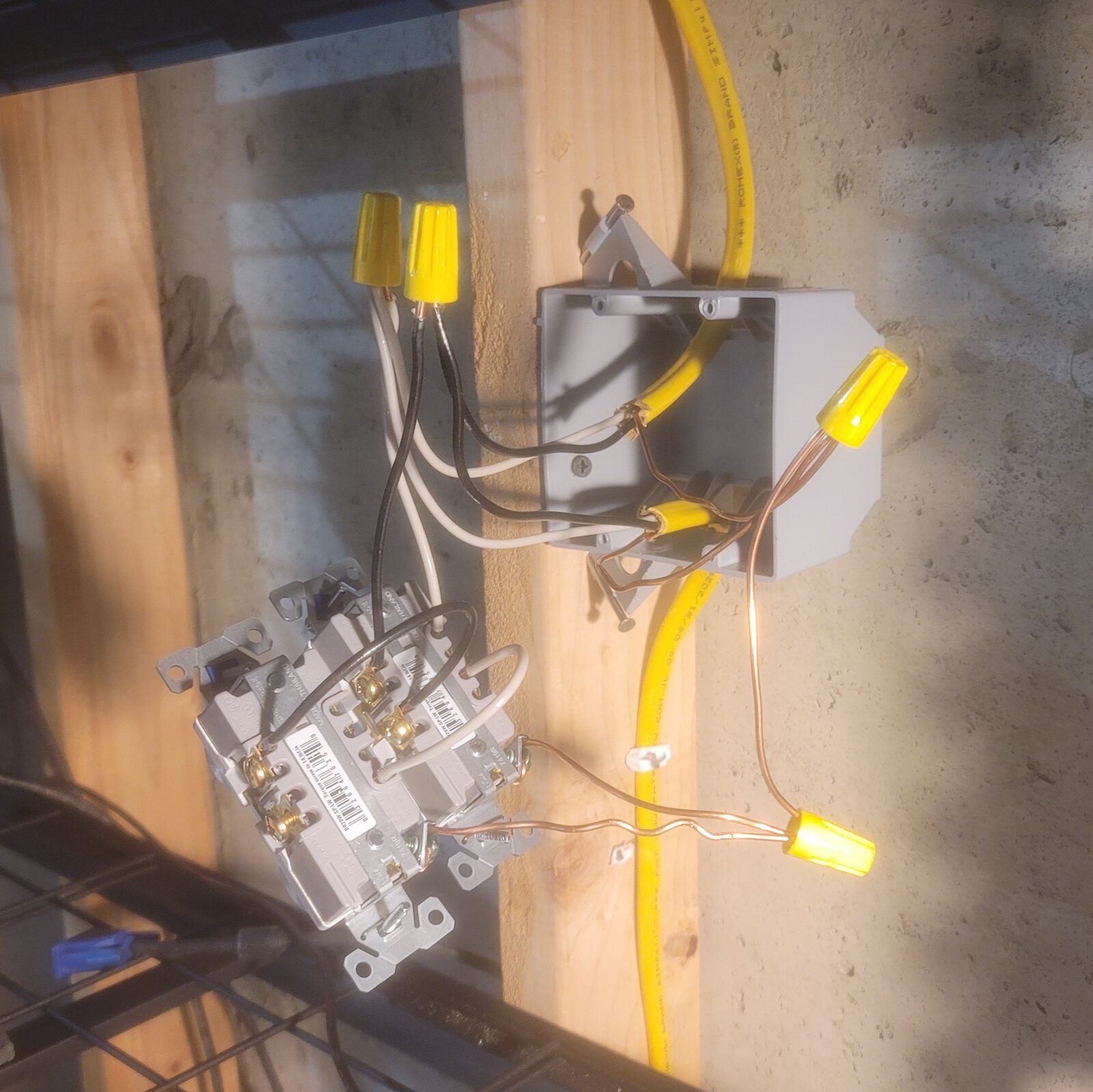
First box. Pigtails meet the feed with yellow wire nuts. Receptacles hang loose until every connection looks right.
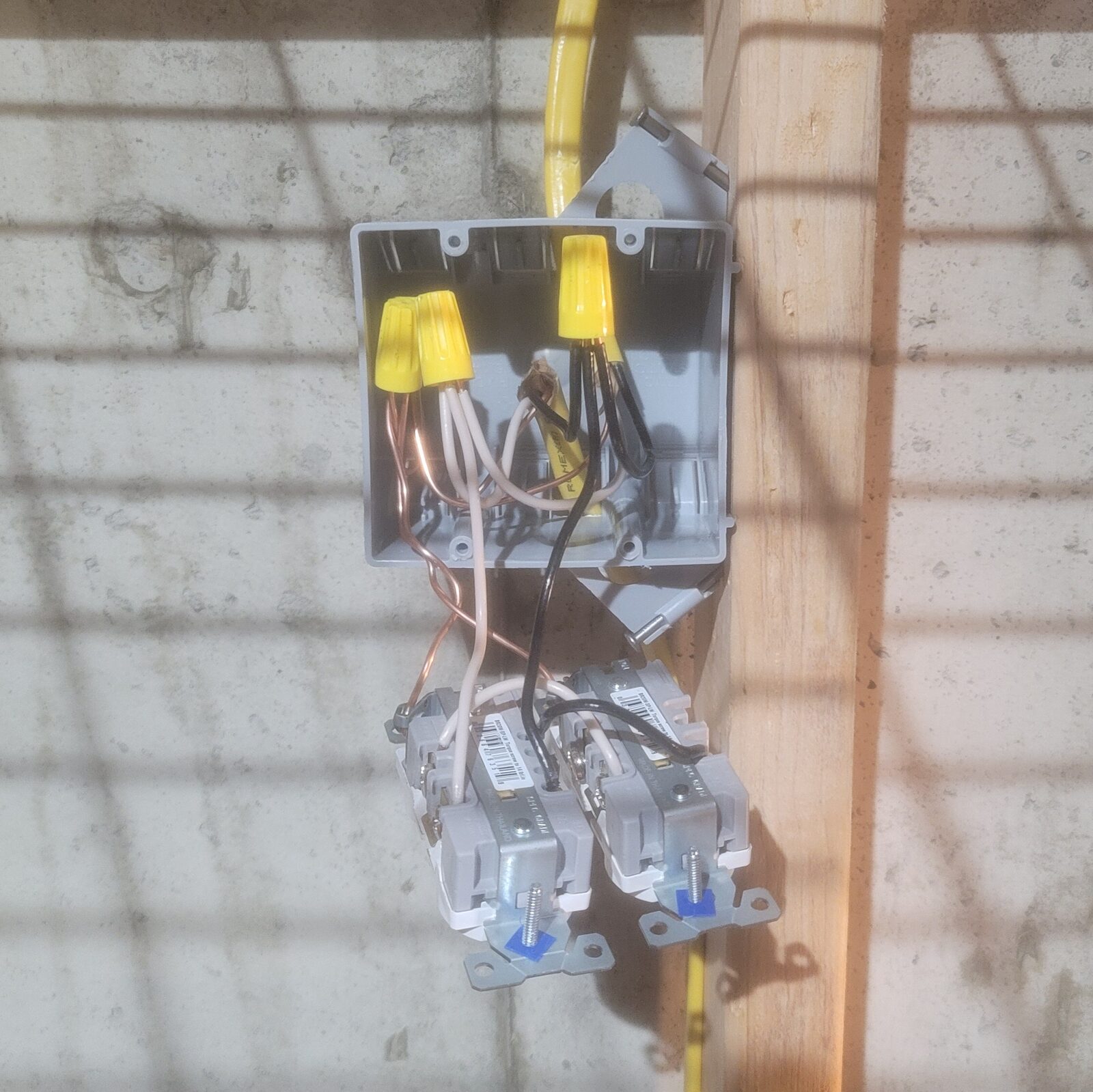
A pass through box. Feed comes in from above, another run leaves for the next box, both splice together with the receptacle leads.
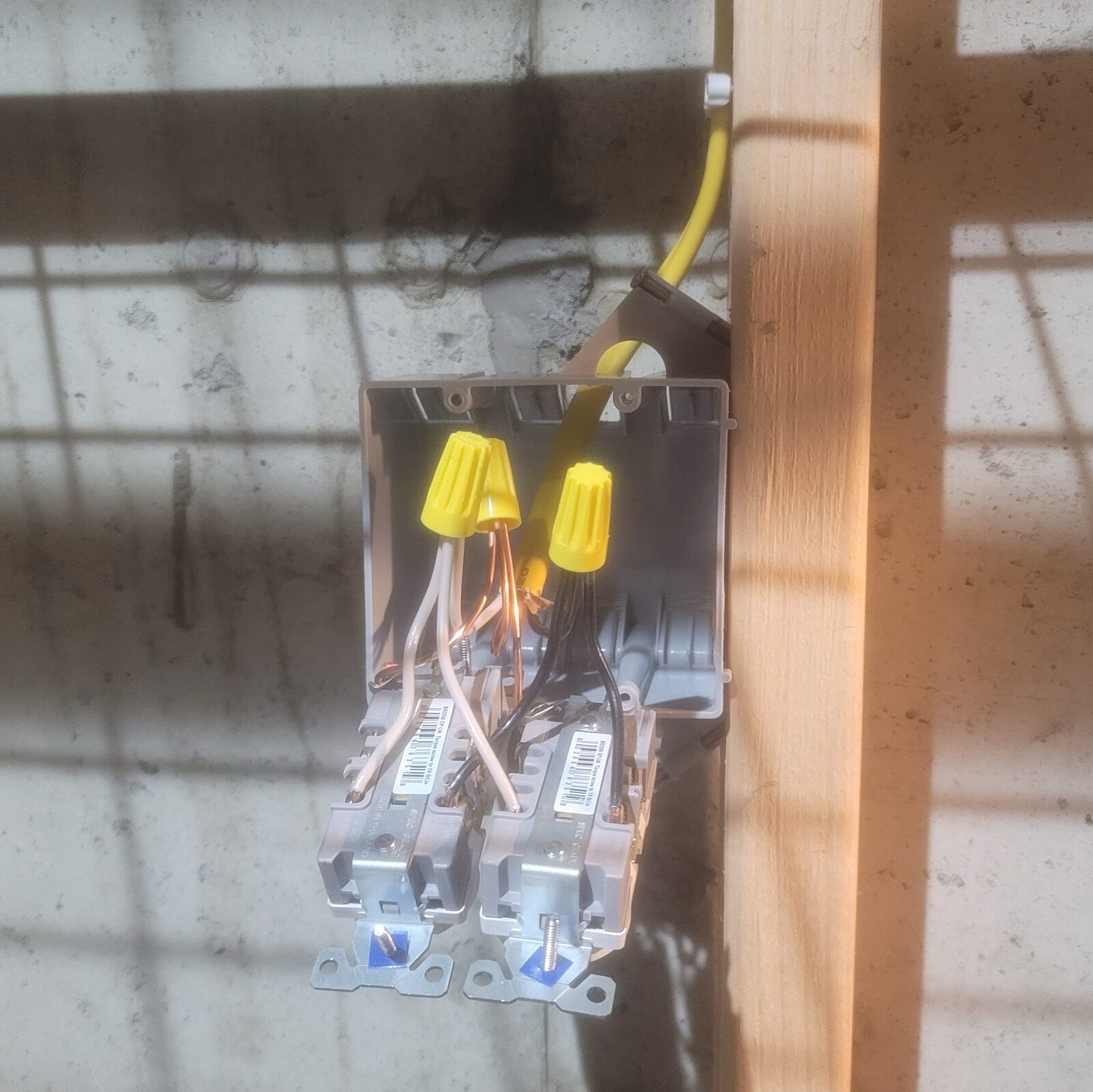
Splices tucked into the back of the box. Grounds, neutrals, hots. Ready to fold in.
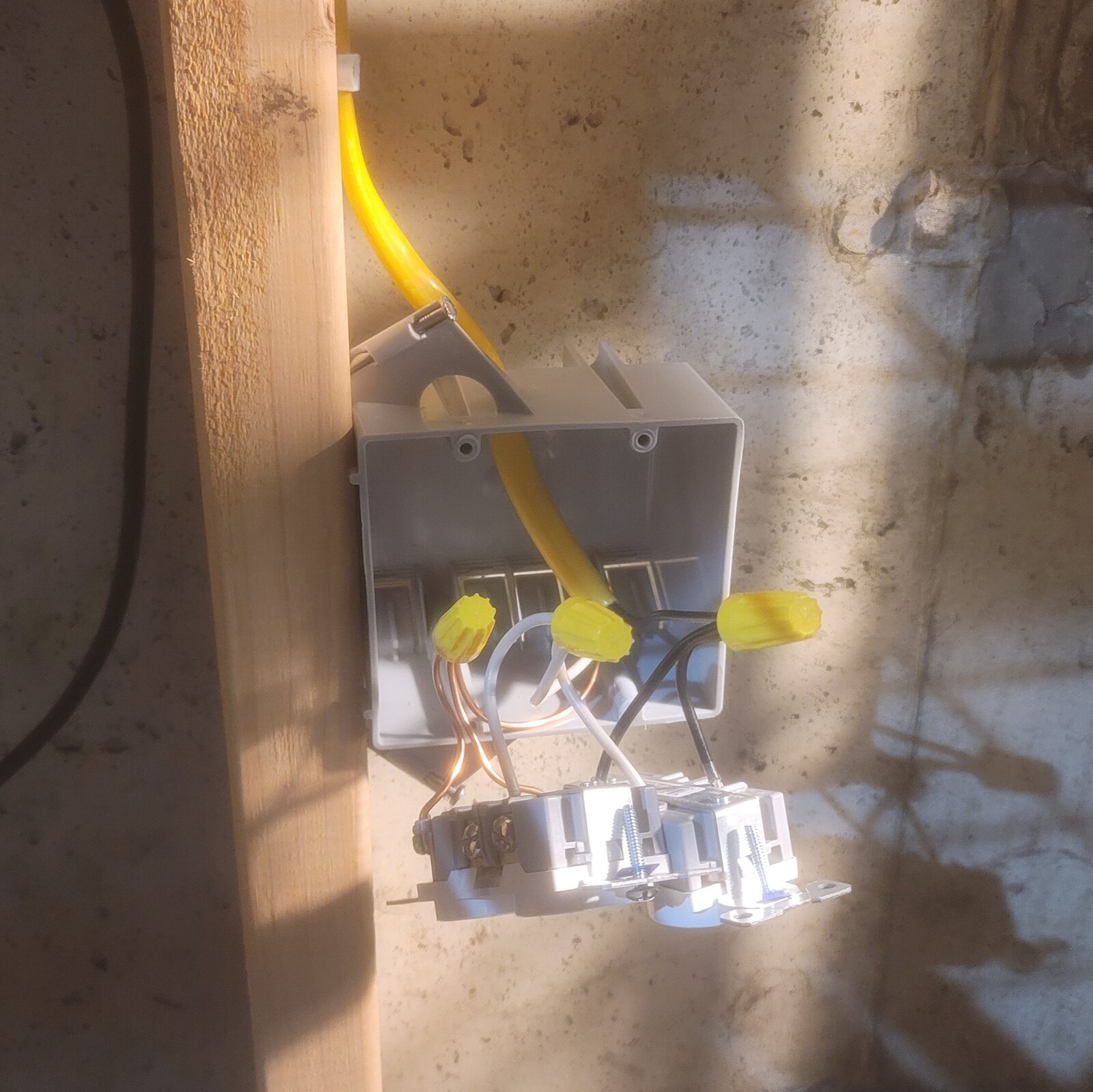
Last box of four. Afternoon sun through the shelving throws a grid across the concrete.
Mounted
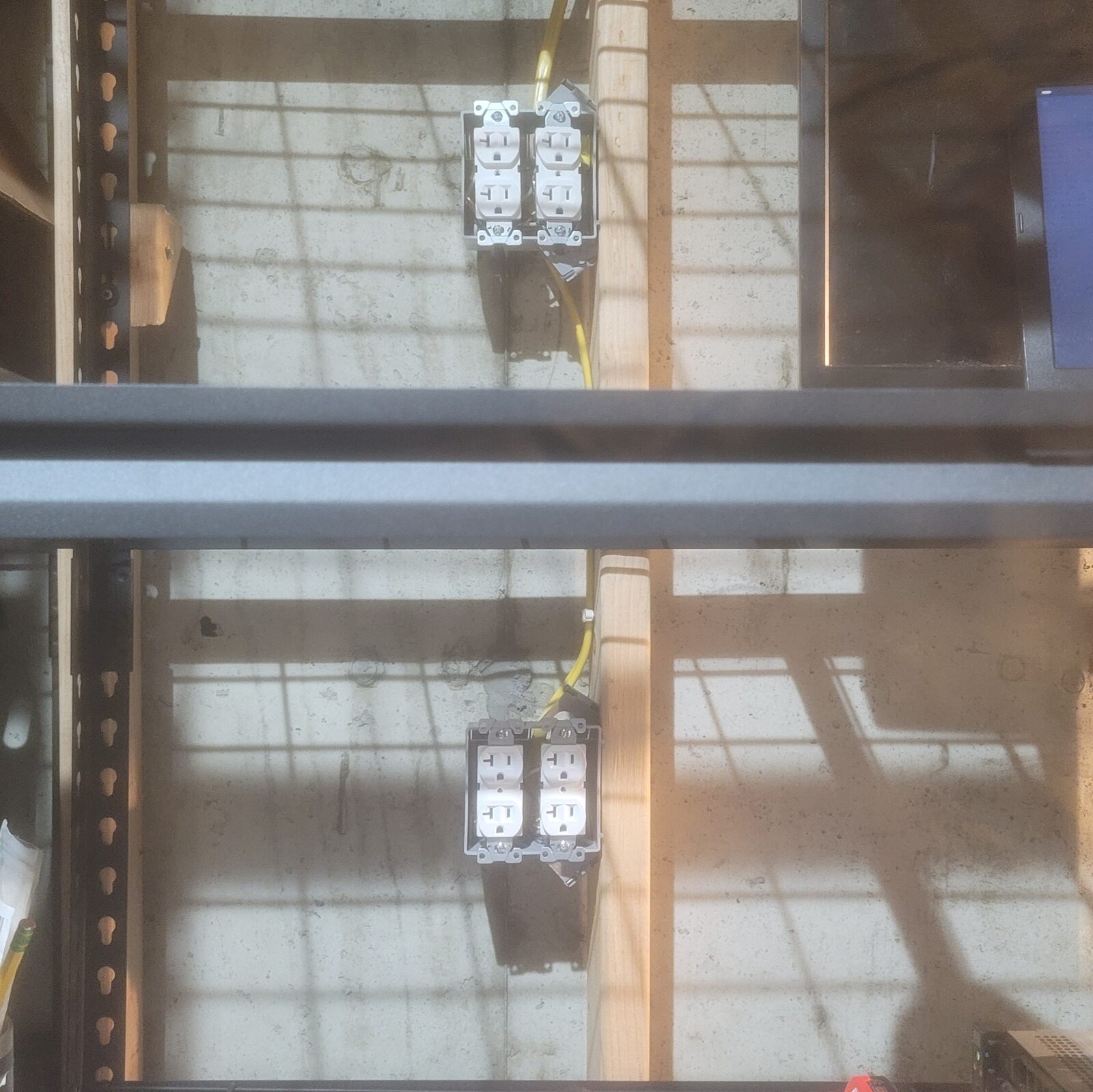
Receptacles screwed in. Two boxes per side, one per shelf level, so every shelf gets power within cord reach from both circuits.
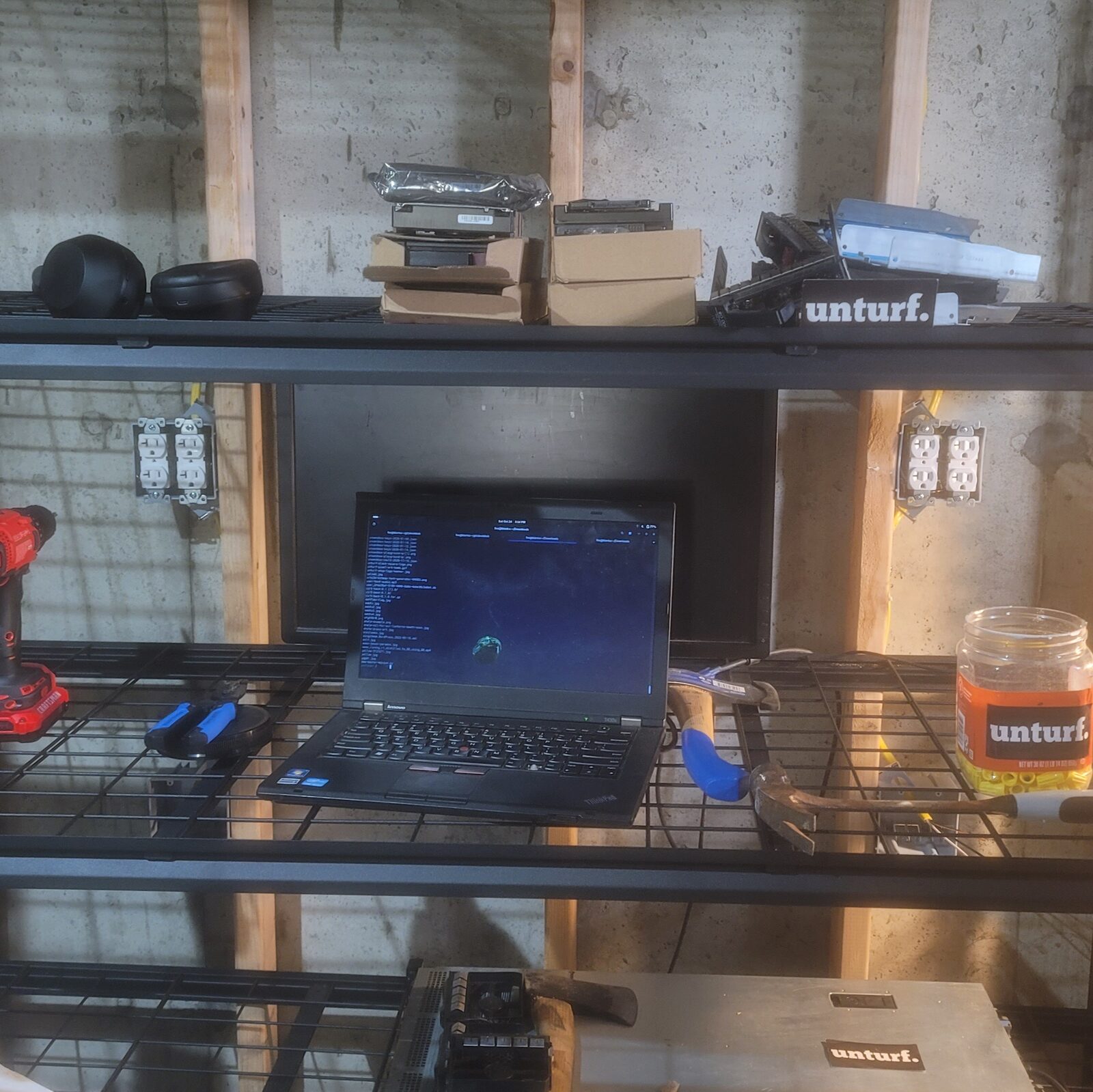
White on the left, black on the right, a ThinkPad between them & hardware waiting up top.
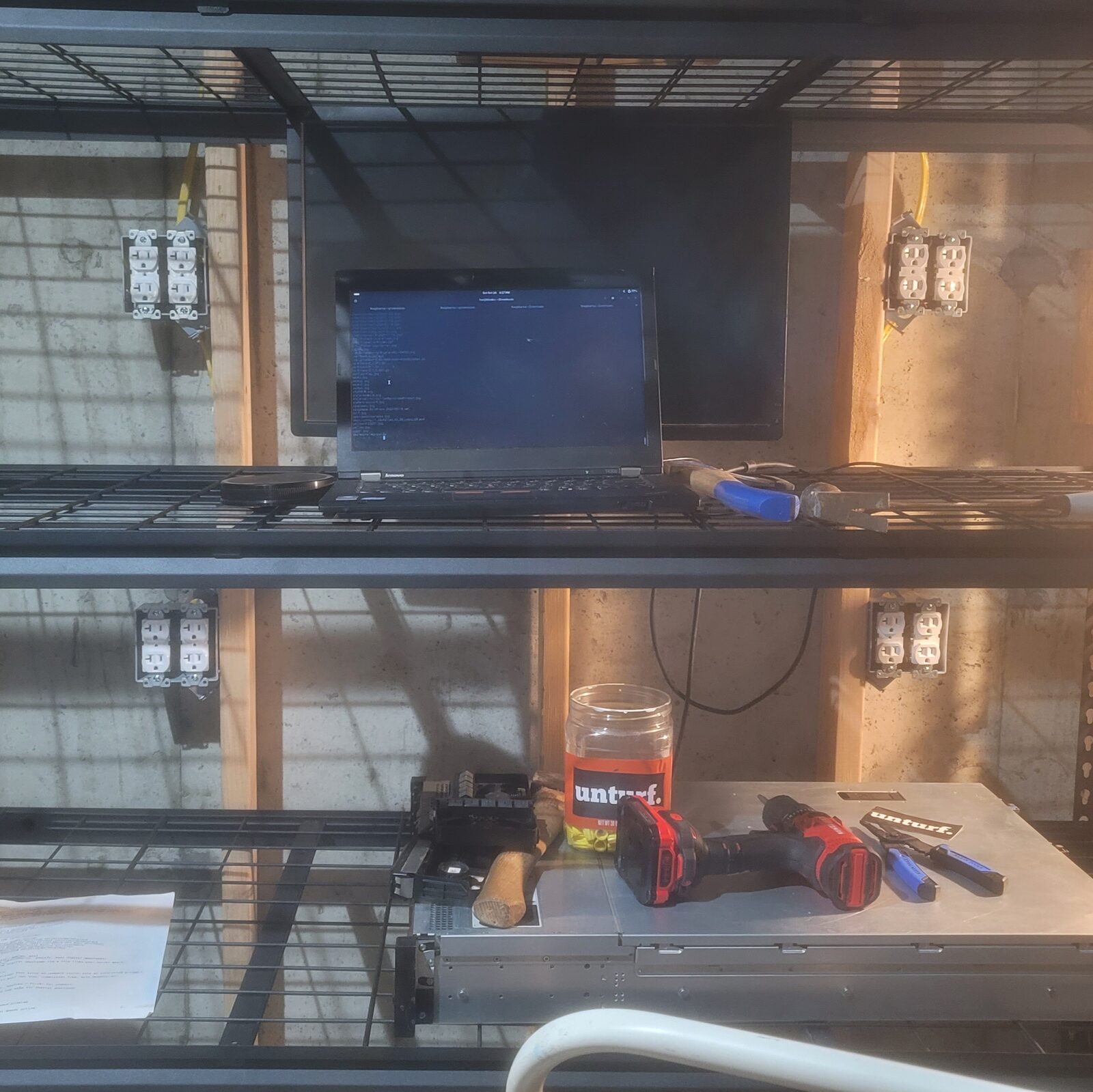
Four boxes, eight duplex receptacles, sixteen outlets. White down the left, black down the right. Once live, a server with redundant supplies on the bottom shelf plugs into both, so either breaker can trip without taking it down.
Not done yet
Two yellow leads still hang at the breaker panel, waiting on new breakers. My father-in-law comes over to help land them, because a panel deserves two sets of eyes. After that comes testing every outlet before any GPU gets near it. I still need a male adapter for the plug in test, too.
Photos of the panel work & test results land here when they happen. Compute at home needs power at home. Next comes turning it on.